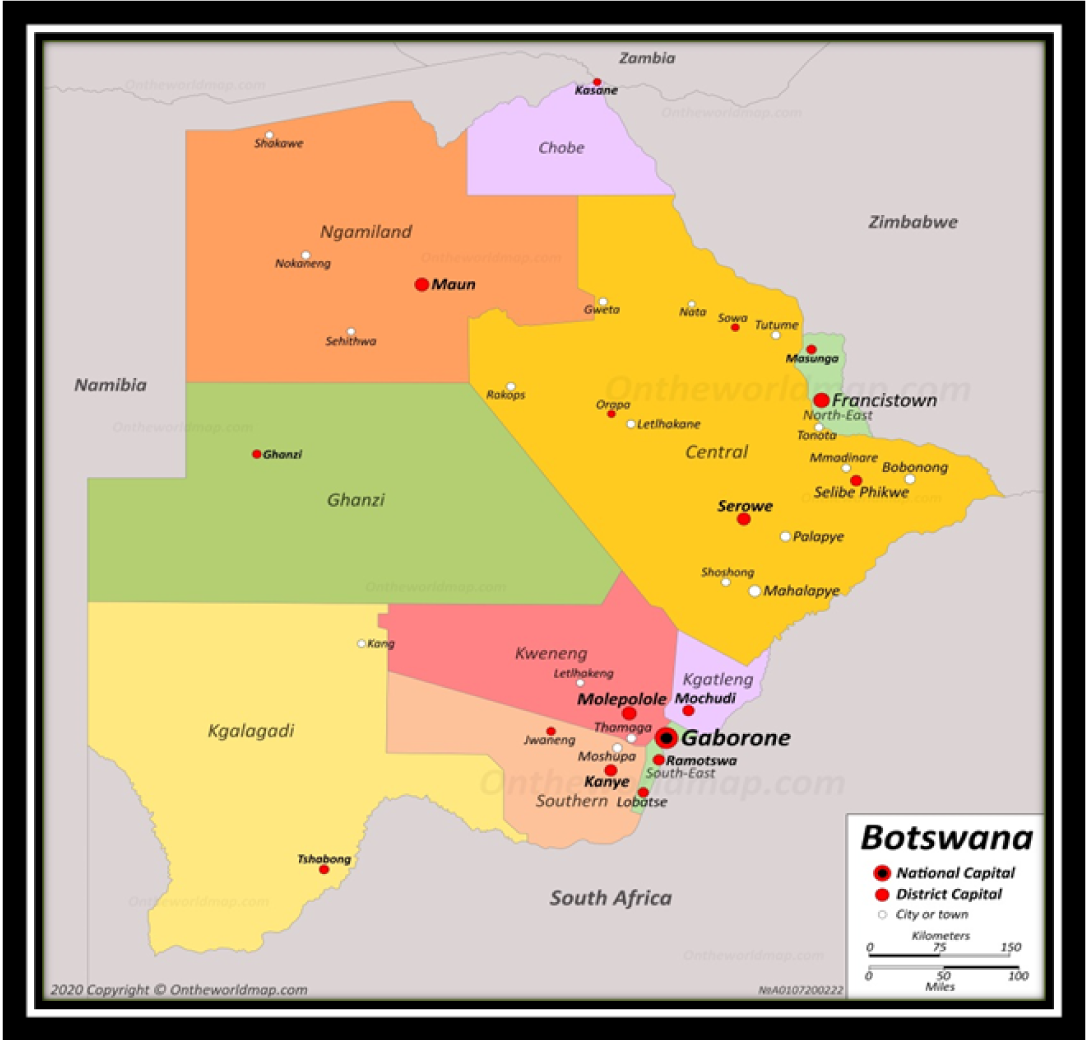
Botswana is divided into 10 administrative district, two cities, five towns and 11 sub districts. These are administered by 16 local authorities (district councils, city councils or town councils).
South-East District
Gaborone
Avenue Medical Centre
Capital Medical Centre
Gaborone Children Care Clinic
Life Gaborone Private Hospital*
Independence Surgery Molefi Close
Karong Clinics
Len Med Health Bokamoso Private Hospital*
Medical Centre *
The Medical Clinic
Middle star Clinic
Princess Marina Hospital
Sidilega Private Hospital
Sir Ketumile Masire Teaching Hospital
Lobatse
Athlone District Hospital
Sbrana Psychiatric Hospital
Supra Sight Hospital
Ramotswa: Bamalete Lutheran Hospital
North-East District
Francistown
Riverside Hospital
Francistown Academic Hospital
Nyangabwe Referral Hospital
Gweta Primary Hospital, Gweta
Masunga Primary Hospital, Masunga
Tutume Primary Hospital, Tutume
Central District
Bobonong Primary Hospital, Bobonong
Lethakane Primary Hospital, Lethakane
Mahalapye District Hospital, Mahalapye
Mmadinare Primary Hospital, Mmadinare
Orapa Hospital, Orapa
Palapye Primary Hospital, Palapye
Rakops Primary Hospital, Rakops
Sefhare Primary Hospital, Sefhare
Selibe Phikwe Government Hospital, Selibe Phikwe
Sekgoma Memorial Hospital, Serowe
Ngamiland (North-West District)
Maun
Doctors Inn
Letsholathebe II Memorial Hospital
Maun General Hospital
Maun Private Hospital
Prime Health Medical Centre
Gumare Primary Hospital, Gumare
Southern District
Good Hope Primary Hospital, Good Hope
Debswana Jwaneng Mine Hospital, Jwanengl
Kanye Seventh-day Adventist Hospital, Kenye
South-East District
Bamalete Lutheran Hospital, Ramotswa
Chobe and Ghanzi District
Kasane Primary Hospital, Chobe
Gantsi Primary Hospital, Ghanzi
Kgatleng District
Deborah Retief Memorial Hospital, Mochudi
Kgalagadi District
Hukuntsi Primary Hospital, Hukuntsi
Tsabong Primary Hospital, Tsabong
Importance EHR
Essential medical information will be different for each person. Although it may not seem relevant, knowledge of even the smallest medical detail could potentially save a life.
Medical problems:
A complete list of all current and past medical problems. This should include chronic diseases such as diabetes, asthma, emphysema, high blood pressure, high cholesterol, cancers, etc.
Medical and surgical history:
List any illnesses, hospitalizations, or operations you have had. This list should be comprehensive and should include a history of strokes, ulcers, sexually transmitted diseases, serious infections, major or minor operations, and mental health disorders.
Childbirth:
Women should add a history of childbirth, including miscarriages, abortions, and caesarean sections as well as natural births.
Current medications:
Have a comprehensive list of any medication you are currently taking, how much you take (dosage), and how often you take it. Medicines such as blood thinners, water pills, blood pressure pills, and anti-seizure treatments can all influence how you are treated during emergencies. Many medications have important interactions with one another. Doctors need this information to avoid potentially dangerous reactions. Included with this medication list should be any herbal, alternative, or over-the-counter medications you take because all of these can have potentially important effects on your treatment, also any tobacco or recreational drug use and alcohol.
Allergies to medicines:
Equally important is a list of all medical allergies. Some people have very serious allergies to common medications. It is essential for doctors to know this information when treating people. When known, the precise type of allergic reaction should be listed. Did you start itching after taking the medication? Did you develop a rash? Or did you have trouble breathing? In addition to allergies to medications (rash, itch, swelling around the mouth generalized swelling, breathing difficulty, shock), also list intolerances (such as nausea, vomiting, abdominal pain, headache, etc.).
Family medical history:
Women should add a history of childbirth, including miscarriages, abortions, and caesarean sections as well as natural births.
Phone numbers:
It is important to list not only family members to contact in case of emergencies but also any doctors, therapists, or other healthcare professionals you see. Each of these professionals can provide valuable information and can be very helpful during emergencies.
Why People Should Have EHR
Here's a relevant scenario: In a busy emergency department, an unconscious man is brought in by ambulance. The paramedics found him on the street, unresponsive but alive, with no obvious signs of what might be wrong. And no one in the hospital knows anything about him/her. This scene is all too common in today's hospitals, where patients often arrive with no medical information. The doctor's job in these cases is very difficult. The doctor must try to treat someone for an unknown medical problem with no knowledge of that person's medical history.
Has he had a heart attack in the past? And is he having another? Has he accidentally overdosed on one of his medications? Furthermore, once his problem is diagnosed, the doctors are faced with not knowing the safest way to treat him. Is he allergic to medicines that, if given, could make him worse instead of better? Does he have medical problems that would make certain treatments dangerous?
With no family in the emergency department, how do the doctors contact the patient's family and friends to tell them he/she is there? Patients often arrive at hospitals without any information about their medical problems. This presents a difficult and potentially dangerous situation. Although the tests and medicines doctors have are very powerful, they can also be unsafe if used on the wrong person. Knowledge of your medical problems can effectively prevent giving you the wrong medication or performing a risky test. Additionally, many of these tests are time-consuming and can delay important treatments. With medical information, it can allow doctors to save time and provide care more efficiently.
Finally, beyond the need to provide immediate care is the importance of contacting family, friends, and physicians. Not only can these people provide important information, but they also can offer much-needed emotional and decision-making support for you. Having the ability to contact families early in your care can help simplify very complicated situations.
Emergency medical care can be life-saving, but is often filled with difficult and expensive decisions that must be made rapidly. Maintaining your own records is one of the best ways for you to take an active role in your own health care and ensure that you receive rapid, effective, and safe treatment in both emergency and routine medical situations.